

About
Aya El-Saqa
CBT & Schema Psychotherapist
Behind every therapeutic space is a human story. Aya El-Saqa’s journey is shaped by curiosity, resilience, and deep respect for the human mind.
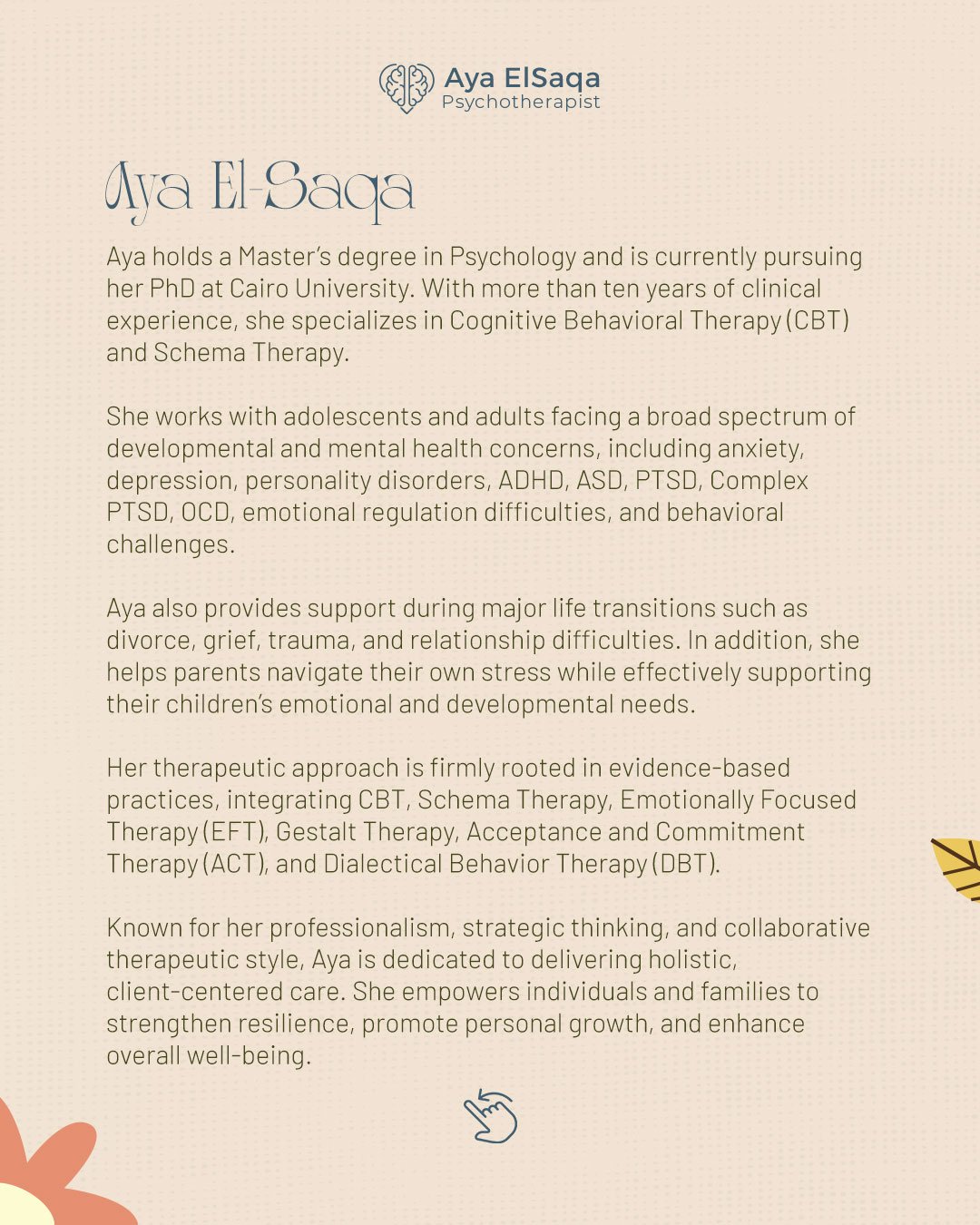
Aya holds an MSc in Psychology and is currently pursuing her PhD at Cairo University. With over a decade of clinical experience, she specializes in CBT and Schema Therapy, supporting adolescents and adults through emotional, developmental, and life challenges with evidence-based, compassionate care.
More About Aya
Aya works with a wide range of mental health concerns, including anxiety, depression, personality disorders, ADHD, ASD, PTSD, Complex PTSD, OCD, emotional dysregulation, and behavioral difficulties. She also supports clients through life transitions such as grief, trauma, divorce, and relationship challenges, while helping parents better understand their children’s needs and manage their own stress. Her therapeutic approach integrates CBT, Schema Therapy, ACT, DBT, EFT, and Gestalt Therapy. She believes therapy is not about “fixing” people, but about helping them reconnect with their strengths, insight, and capacity for growth.
Beyond the Therapy Room
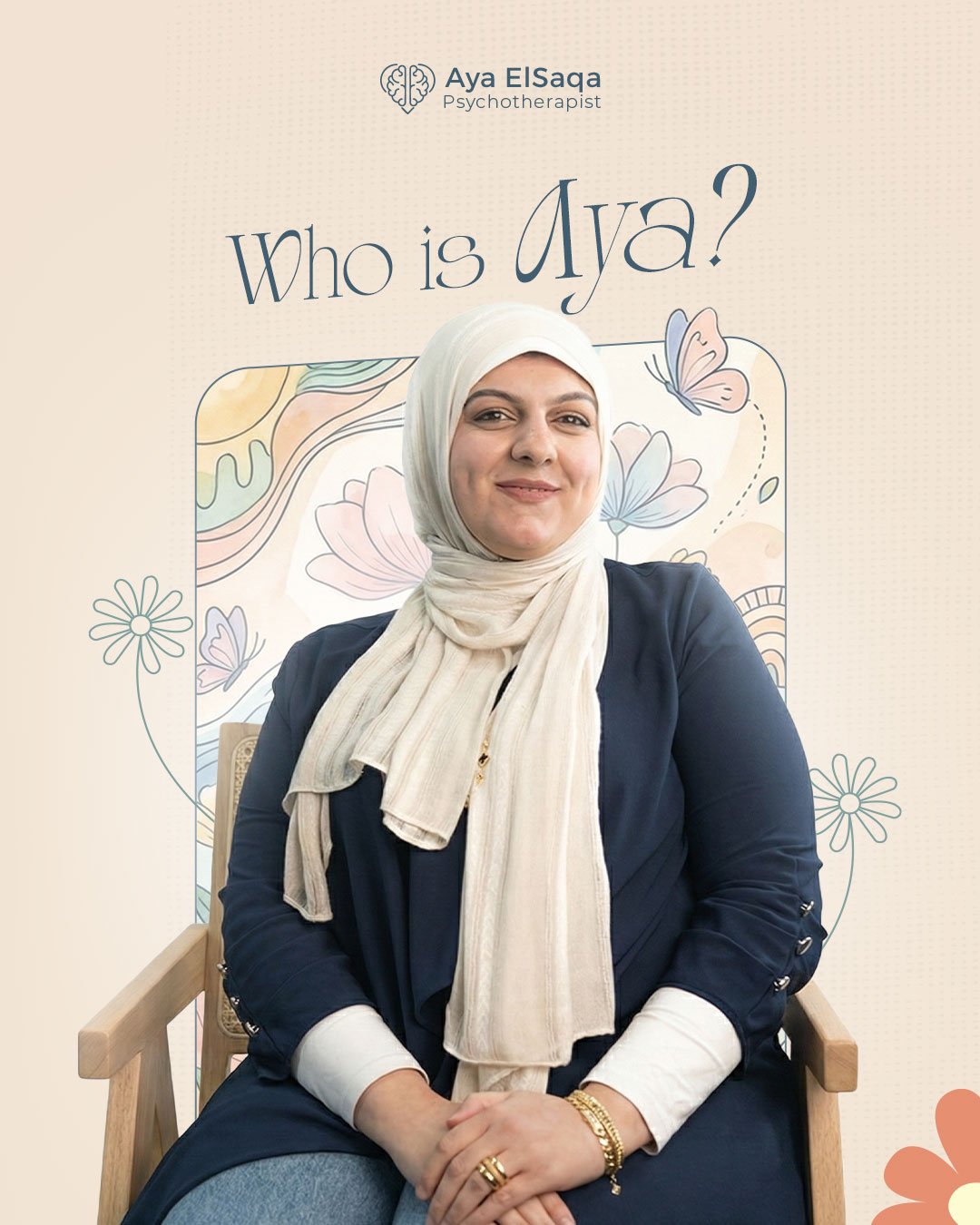
Who Is Aya, Really?
Aya is half Egyptian and half Palestinian, a background that shaped her identity, sensitivity, and worldview.
Outside her clinical work, she finds inspiration in classical music, poetry, baking, discovering new restaurants, organizing, the sea, and nature. These human layers enrich her work and deepen the way she connects with others.
Her Story
Aya was born and raised in Kuwait, where her love for learning was shaped early by her mother’s belief in education. From a young age, she learned independence, resilience, and self-driven achievement. After high school, Aya moved to Egypt and studied Psychology at Cairo University. She completed her bachelor’s degree in 2013 and later earned her master’s in Cognitive Psychology, training under Professor Abeer Anwar. Over the years, she trained in schools, centers, and clinics, building broad clinical experience. After earning her master’s degree in 2021, she began her PhD and continues to expand her expertise through advanced training in CBT, ACT, and Schema Therapy.
Mind & Body
An Integrated Path to Healing
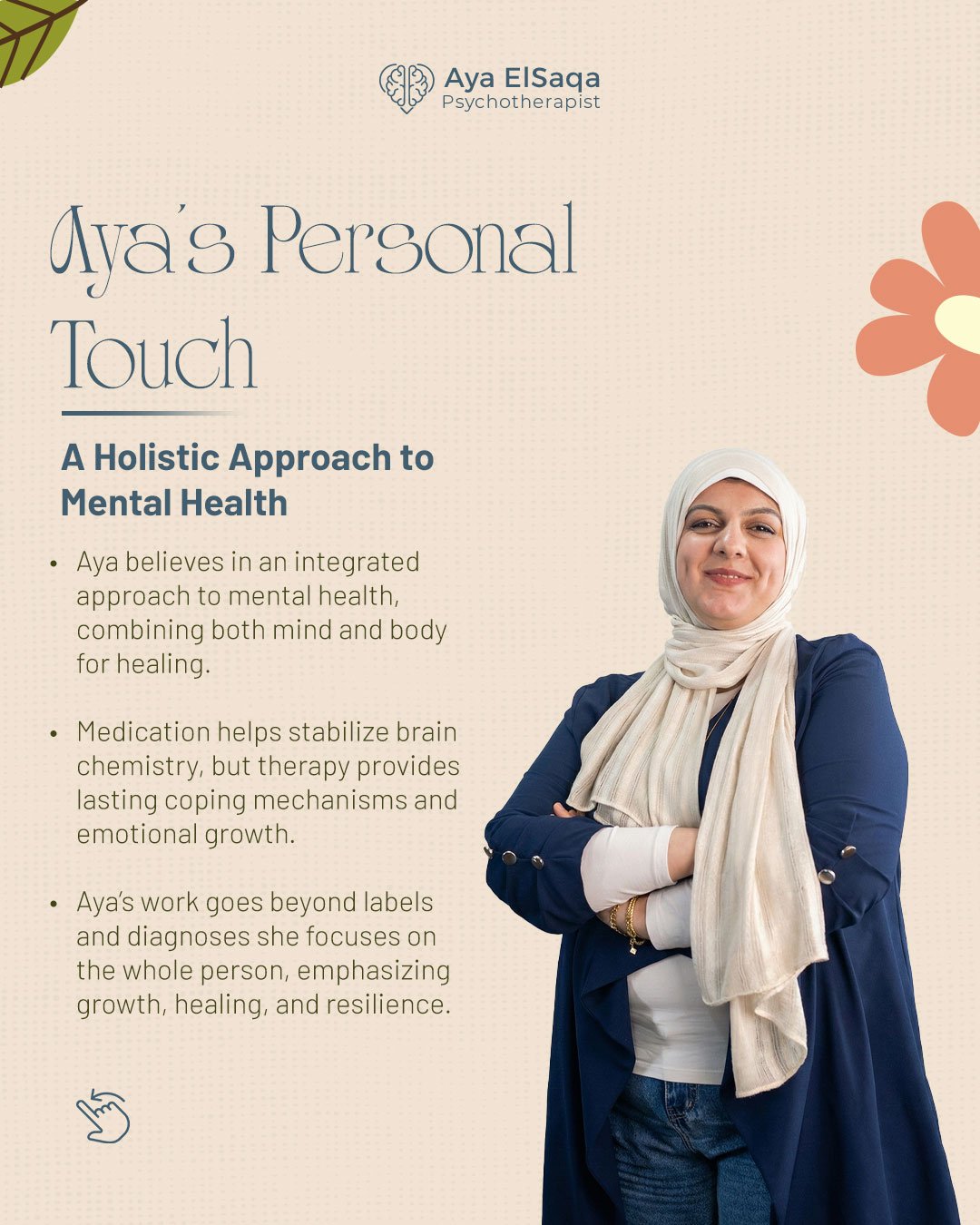
Mental health thrives through integration. While medication may help regulate brain chemistry and reduce distress, psychotherapy offers tools for understanding, coping, and reclaiming agency.
Together, they create a balanced path toward resilience, insight, and growth.
Diagnosis
Understanding, Not Labeling Diagnosis is not a label. It is a guide that helps clarify the roots of a person’s struggles and whether medical support may be helpful alongside therapy. Each client is seen as a whole human being, not a category. Therapy remains a safe and respectful space for exploration, understanding, and healing.
Tailored Therapy
No One-Size-Fits-All Every concern requires an individualized approach. Anxiety, for example, may be addressed through CBT, DBT, ACT, or an integrated model. The method is chosen based on the client, not only the diagnosis. Aya thoughtfully combines effective strategies to support each person’s unique journey.
Therapeutic Reflections
Aya believes clients must be understood in the way they need to be understood. This is the foundation of meaningful change. The therapeutic relationship is a powerful part of healing and must be built with safety, awareness, and clear boundaries. Evidence-based therapy should remain flexible, tailored to each person’s context, and centered around the client’s goals, not the therapist’s assumptions.
Her Story
The Journey of Aya El-Saqa
From an early love for learning to a deep commitment to understanding the human mind, Aya's path has been shaped by curiosity, resilience, and compassion.
Early Roots
Aya was born and raised in Kuwait, where she spent the first eighteen years of her life.
Her family played a central role in shaping her mindset, especially her mother, who deeply valued education and invested great effort in supporting Aya and her siblings.
From a young age, Aya developed a strong love for learning, discipline, and personal growth.
A Turning Point in Independence
One of Aya's most memorable childhood moments was waking up at dawn to review her exam papers on her own, without waiting for her mother to wake her.
This moment helped her mother recognize Aya's passion for studying and her growing sense of responsibility, allowing her to continue her academic journey with greater independence.
Aya found joy in achievement and loved being among the top students.
Resilience Through Challenge
During a financially difficult period for her family, Aya had to move to a different school system, which affected her academic performance.
A teacher once told her she was not progressing, and those words hurt deeply.
But instead of giving up, Aya used the experience as motivation. She worked hard, regained her confidence, and turned adversity into a source of strength.
Choosing Psychology
After finishing high school in Kuwait, Aya moved to Egypt to continue her university education.
Although her family encouraged her to study psychology, the decision became deeply personal when she saw a large sign that read "Psychology" and felt it was a clear sign for her path.
This marked the beginning of a life-changing journey at Cairo University.
Discovering Her Passion
During university, Aya began taking courses focused on childhood development and behavioral sciences, including Applied Behavior Analysis, behavior modification, and intelligence measurement.
These studies shaped her belief in understanding people through their strengths and helping them develop from within.
Her passion for psychology grew as she learned more about behavior, cognition, and human potential.
A Deeper Academic Path
After completing her bachelor's degree, Aya chose to remain in Egypt and pursue her Master's in Cognitive Psychology at Cairo University.
She became fascinated by mental processes, personality dynamics, and human behavior.
Her thesis supervisor, Professor Abeer Anwar, became a major source of inspiration, teaching her the value of compassion, humanity, and professionalism in psychological work.
Training and Clinical Growth
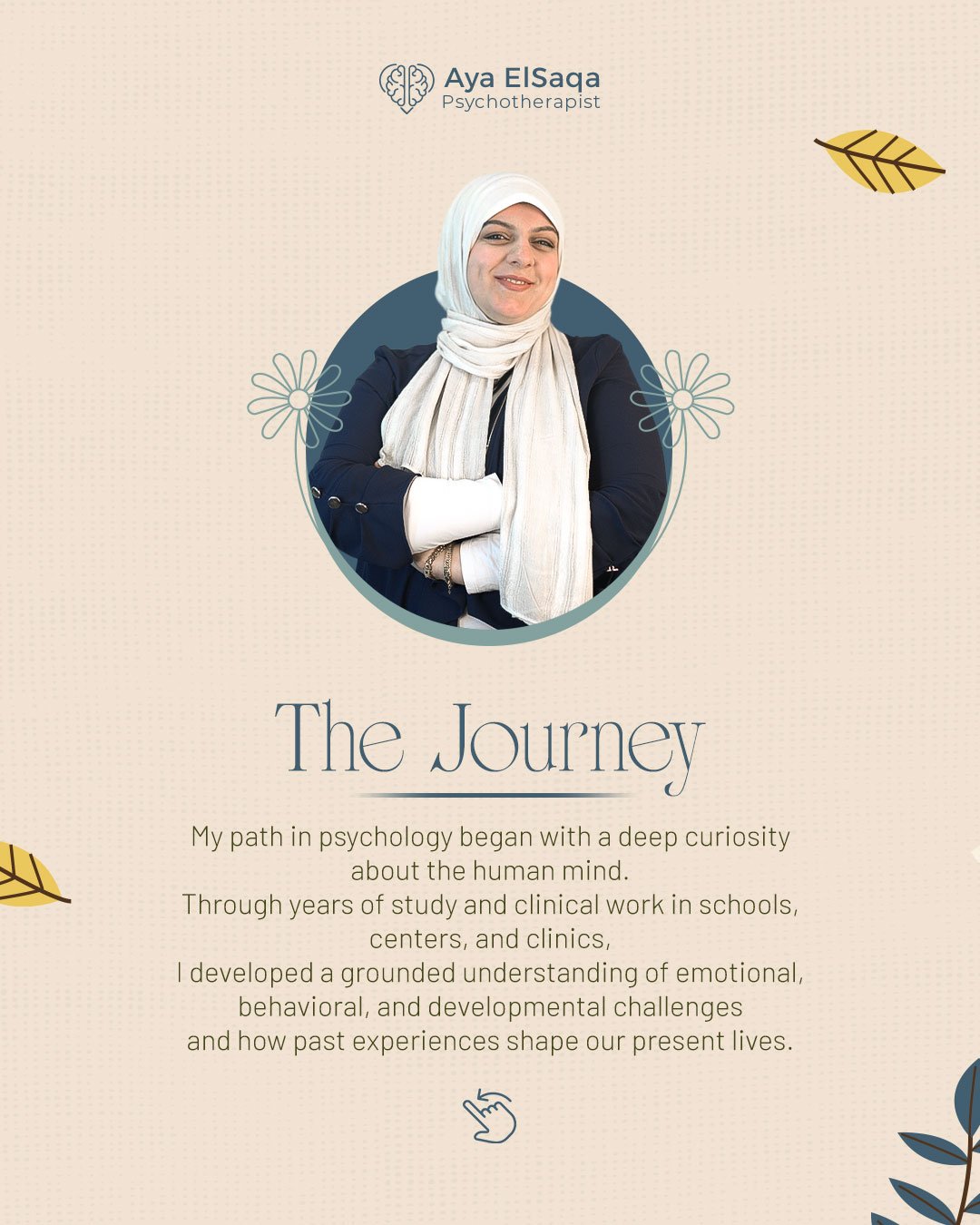
During her studies, Aya trained and practiced across different settings, including schools, centers, associations, and clinics.
These experiences helped her build a broad understanding of neurodevelopmental, behavioral, and emotional challenges.
They also strengthened her ability to see each person as a unique individual shaped by their own experiences, needs, and environment.
Doctoral Journey
After earning her Master's, Aya began her PhD journey the following year, driven by her passion for understanding the human mind and promoting emotional well-being.
Her work continued to focus on supporting adults and parents through emotional and life challenges using an empathetic, evidence-based approach.
Applying Science With Heart
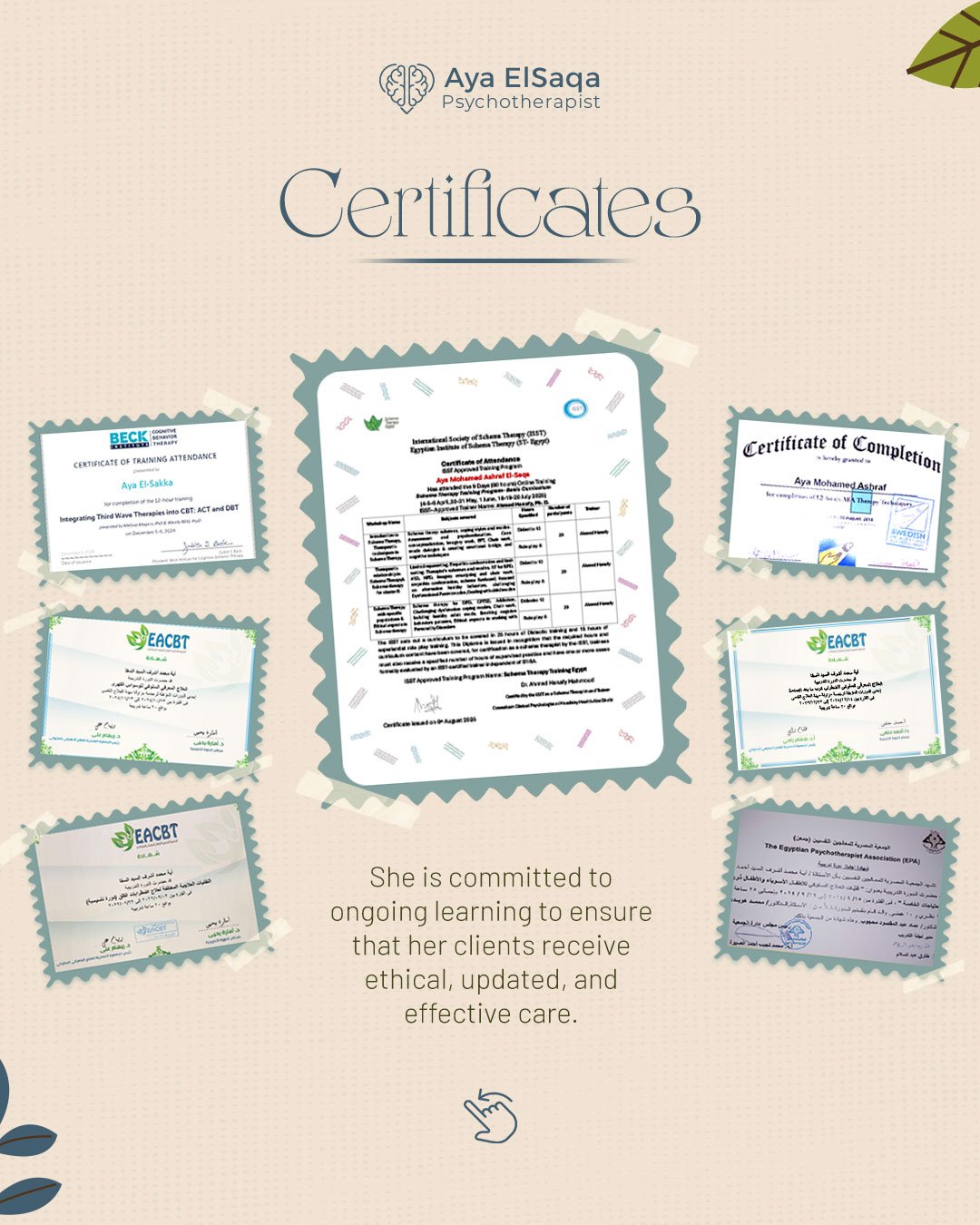
Today, Aya continues to grow through ongoing learning, diplomas, and professional training in approaches such as CBT, ACT, and Schema Therapy.
At different clinics, she applies her knowledge with compassion, science, and humanity, supporting clients as they build resilience, clarity, and emotional well-being.
Her guiding question remains: "What else can I do to make a difference?"
Therapeutic Reflections
Beliefs behind Aya's practice
Therapy is most meaningful when evidence-based care meets presence, flexibility, and deep respect for each client's lived experience.
- Clients should be understood in the way they personally need, because this creates the foundation for meaningful therapeutic growth.
- The therapeutic relationship is a powerful agent of change and requires awareness, trust, consistency, and healthy boundaries.
- The therapist's emotional, cognitive, and relational presence is essential for building trust and preventing disengagement.
- Therapy should combine evidence-based methods with flexibility, allowing techniques to be adapted to each client's unique context.
- Therapy must remain focused on the client's needs, goals, and agenda, rather than the therapist's assumptions or expectations.
- Self-awareness helps therapists distinguish their own experiences from their clients' experiences and maintain objectivity.
FAQ
What happens in the first session?
The first session is for understanding what brings you to therapy, your background, and your goals. We agree on a clear direction and a pace that feels safe, and you can ask any questions about the process.
How long is each session?
Sessions are typically 50 minutes.
Longer sessions may be arranged when clinically appropriate.
How many sessions will I need?
It depends on your goals and the nature of the concern. Some clients prefer short-term, skills-focused work, while others choose longer-term therapy to address deeper patterns. You’ll regularly review progress together.
Do you offer online sessions?
Yes—online sessions are available and in-person sessions.
Is therapy confidential?
Confidentiality is a core part of therapy. Information is kept private, with limited exceptions related to safety concerns or legal/ethical requirements, which will be explained clearly.
How can I book an appointment?
You can request an appointment through the booking form on the website, or contact directly via phone/WhatsApp or email. You’ll receive a confirmation with the available times and next steps.